Showing posts with label Autos. Show all posts

9.13.2008

A bureaucratic government solution


Democrats Propose Gas Stamps

Excerpt:
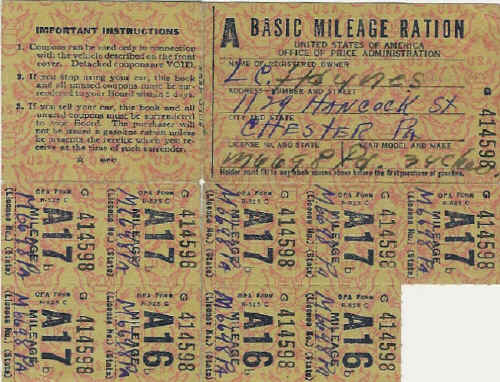
As the U.S. economy teeters on the brink of recession, Democratic leaders are revisiting an idea born of the Great Depression: gas stamps to help Americans cope with high fuel prices.

The proposal to subsidize fuel costs for lower-income families and individuals would almost certainly be popular with white, working-class voters and could boost Barack Obama’s appeal with that critical voting bloc in this year’s presidential election.

Democratic lawmakers and their leaders say they are serious about including it in a second economic stimulus package expected to move this month. Meanwhile, Republicans ridicule the idea as a return to welfare-state politics, which they say characterized the Democratic Party before Bill Clinton.

“It’s certainly under consideration,” House Majority Leader Steny Hoyer (D-Md.) told The Hill on Thursday afternoon. “It would be like food stamps for those people who need help.”

Gas stamps would work like traditional food stamps, which some Americans have collected since the 1930s. They would be used, however, to pay for regular unleaded instead of meat and potatoes.

Under one version of the proposal, a person earning up to $31,200 or a family of four earning up to $63,600 could receive government payments totaling $500 for gas.


HT: The Truth About Cars

8.21.2008

Bailout Detroit? NO!

The Next Bailout: Detroit

Excerpts:

Earlier this month, the Detroit Free Press reported that the top dogs at Ford, GM and Chrysler had a meeting of the minds and decided that the way out of their current losing streak would be to ask the feds for a lifeline. They figure they'll need $40 billion or so to ride out their current troubles until they reach the promised land of hybrids, the Chevy Volt, and, who knows, maybe even profits.

We've since heard that lobbyists for the car makers are taking their pitch for direct federal loans around Washington, with a goal of unveiling the plan after Labor Day -- conveniently in the frenzy of the fall election campaign.

...

The plan is for the government to lend some $25 billion to auto makers in the first year at an interest rate of 4.5%, or about one-third what they're currently paying to borrow. What's more, the government would have the option of deferring any payment at all for up to five years. Meanwhile, Barack Obama recently signaled that he's open to federal money to help the auto makers invest in "renewable" technology, and Michigan Senator Debbie Stabenow and Mr. Dingell are supporting the $25 billion in loans to the not-so-Big Three as part of a second-round economic "stimulus."


Comment: Capitalism means some companies will fail!

8.13.2008

9/11 truck featured in Olympics' ad

Give this pickup truck the gold

Excerpt:

They parked near the south tower in time to survive the first collapse and then the second. I watched Monahan immediately afterward crawl into the ruins to search for the 11 missing firefighters from his firehouse, Engine 24/Ladder 5.

When he finally returned to his Silverado, Monahan saw that the falling debris of the south tower had stopped inches short of his front bumper. The surrounding vehicles had been gutted by fire and the truck's front lights had melted into what looked like huge tears.

The steering wheel had also begun to melt and the interior of the cab was singed. Monahan reached in to turn the ignition key and was astonished to hear the engine start right up.

Somebody operating a wrecker helped clear a path for Monahan to pull away. He changed a front tire that had been bubbled by the heat and he headed for the firehouse.

"The first victory of World War III," Monahan announced.

Somebody salvaged the oversized nameplate from Ladder 5's destroyed rig and affixed it to the side of the pickup that ferried them to and from The Pit over the days that followed.

The sight of them going by in this burned and battered truck with "Ladder 5" bolted to the side always drew a rousing response from folks in the street.

"Every time we got in the truck, they were just cheering," Monahan said. "It was American spirit at its best. ... 'You can't keep us down!'"


Comment: Pics in linked article.

7.31.2008

More pain for automakers on the way

Nobody Loves a Three-Year-Old SUV - Thousands of leased gas-guzzlers are back on the lot, and their resale value will batter bottom lines

Excerpt:

Art Spinella, president of CNW Marketing Research, estimates that this year alone the industry will lose $4.7 billion on sales of previously leased SUVs. "This caught everyone by surprise," he says. And it's a problem that will keep on giving because many automakers only recently started to write fewer leases. So there are plenty of newly leased gas-guzzlers out there, some with terms as long as 39 months. Spinella sees $10 billion more in lost value as thousands more SUVs come off lease in 2009 and 201

When automakers calculated lease terms three years ago, they assumed the cars and SUVs would be worth much more once the lease ended than they are. But resale values on large SUVs have fallen 13% from March through May, with some pickups dropping more than 20%, according to Manheim, the nation's largest used-vehicle wholesaler. Knowing the value has plunged, consumers aren't extending leases on many SUVS and aren't keen to buy the vehicles outright.

....

Carmakers aren't the only ones getting spooked. Wells Fargo Bank (WFC) said that, starting at the end of July, it will no longer buy auto leases from carmakers. And investors are sharing the pain, too. Last month, Standard & Poor's (MHP) put nine asset-backed securities packed with auto leases on credit watch for a possible downgrade. Investors holding that paper have already taken a hit.


Comment: Almost like a subprime crisis for the automakers. They (or their finance company or investors who own "the paper") own the asset (the leased SUV), they thought the asset was worth "X", but in reality is is worth "X minus drop in market value". Multiple that by thousands of SUV's coming off leases and you have a crisis.

7.10.2008

Talking with a Fortwo owner

Smart’s tiny proportions defy expectations

Excerpt:

... the fortwo’s Lilliputian proportions defy expectations in many ways. For starters, the cabin is not cramped. And the view through the windshield is deceptively conventional, letting the occupants forget how small the smart really is (until they look behind their seats and realize there isn’t much of anything behind them.)

And while the fortwo would probably not be anyone’s first choice of vehicle in which to suffer a collision, the little car is actually much safer than its dimensions would suggest. That’s a result of exhaustive effort on the part of Mercedes-Benz, which developed the car alongside Swiss watch manufacturer Swatch, to maximize the safety of a minimalist car. As a company with deserved safety credentials, Mercedes’ claims that it has succeeded in designing a tiny car that can protect its occupants in the event of a crash merits some respect.

The fortwo’s engineers “did their homework and designed a high level of safety into a small package,” notes Adrian Lund, president of the Insurance Institute for Highway Safety, a not-for-profit organization funded by automobile insurers that measures vehicle safety. So tooling around town in your smart is certainly not a death-defying stunt.


Comment: We've seen the same yellow Fortwo three times. All on Plymouth Avenue near downtown. Today I was next to the driver at a stop light. I rolled my window down and chatted with her. She said she gets 45 mpg in the city. Kathee said I was flirting with her (trust me I wasn't!).

6.26.2008

The 3,000 Mile Oil Change Myth

The 3,000 Mile Oil Change Myth

Excerpt:

It’s been a misconception for years that engine oil should be changed every 3000 miles, even though most auto manufacturers now recommend oil changes at 5,000, 7,000, or even 10,000 mile intervals under normal driving conditions.

Greatly improved oils, including synthetic oils, coupled with better engines mean longer spans between oil changes without harming an engine. The 3000 mile interval is a carryover from days when engines used single-grade, non-detergent oils.

Comment: Great tip

6.17.2008

Corvette ZR1 assembly


Comment: Very cool! I want one (never gonna happen!)

6.04.2008

The end of the SUV?

G.M. Shifts Focus to Small Cars in Sign of Sport Utility Demise

Excerpts:

And in a humbling admission that the S.U.V. era is all but over, G.M., Detroit’s leading automaker, said it was considering selling the gas-guzzling Hummer brand it once regarded as a pillar of future growth.

In announcing the changes, Mr. Wagoner said $4-a-gallon gas prices had forced a “structural shift” by American consumers away from large vehicles into more fuel-efficient cars.

“These prices are changing consumer behavior and changing it rapidly,” Mr. Wagoner said before G.M.’s annual meeting in Wilmington, Del. “We don’t believe it’s a spike or a temporary shift. We believe it is permanent.”
...

But the day of reckoning for the full-size S.U.V. and its 14-miles-per-gallon fuel consumption has been coming for some time.

“At the peak in 2002, G.M. sold 600,000 full-size S.U.V.’s, but they’re on pace this year to sell less than 250,000 of them,” said David Healy, an analyst with Burnham Securities. “And the nails in the coffin are getting screwed down a little tighter.”

Big Vehicles Stagger Under the Weight of $4 Gas

Excerpt:

With help from Jake Fisher, a senior automotive engineer at the Consumer Reports test track in Connecticut, I crunched some numbers this week to see how much more expensive these big vehicles had become. The answer is pretty simple: a lot more expensive.

While the F-250 costs $100,000 and a fully loaded F-150 — the better-known, smaller Ford pickup — costs about $70,000, a Ford Focus still costs less than $40,000 over five years. A Honda Civic Hybrid does, too. A Toyota Prius costs only a little more. A Subaru Outback station wagon runs $50,000 or so.

To put this in perspective, the difference between a Focus and an F-250 over five years is $60,000. The annual pretax income of a typical family in this country is also about $60,000. So choosing a F-250 over a Focus is like volunteering for a 20 percent pay cut. The relative resale values might cushion the blow a little, but not much.

That’s why more people are deciding that towing capacity and the other benefits of pickup trucks and S.U.V.’s are not worth the costs. The F-250 may still make sense for some business owners. But, as Mr. Fisher says, on those few occasions when the rest of us need to move some horses, we can rent a truck. “The new economics of car buying is, ‘Don’t overbuy,’ ” he told me. “Buy something you’re going to need most of the time.”


Comment: The end of the SUV? I hope so! (4 years ago I almost bought one. Gas was on the verge of $ 3.00 per gallon. We bought an Impala instead).

6.03.2008

"a structural change, not just a cyclical change"


GM to Close Four Truck Plants, Shift Output to Cars

Excerpt:

Gasoline exceeding $4 a gallon represents ``a structural change, not just a cyclical change,'' Rick Wagoner, chief executive officer of the largest U.S. automaker, told reporters today before its annual shareholders' meeting in Wilmington, Delaware.

The four plant closings will save $1 billion annually and cut North American capacity by 700,000 for trucks and, with added shifts at car factories, by 500,000 overall, he said. At Hummer, ``we're considering all options from a complete revamp to a partial or complete sale of the brand,'' Wagoner said.

A doubling of U.S. gasoline prices since 2004, including a 31 percent surge this year, is forcing Wagoner to accelerate production of more fuel-efficient vehicles as he tries to end three years of losses. Cars will account for 60 percent of Detroit-based GM's North American production in three years, up from about 50 percent now, he said.

``It is significant, but this is a late reaction to changing market dynamics,'' said Dennis Virag, president of Automotive Consulting Group in Ann Arbor, Michigan. ``The plans really should have been in place a number of years ago.''


Comment: When we moved to Plymouth 12 years ago (12 years ago this week!), gas was under $ 1.00 a gallon. Four years ago $ 2.00 per gallon. Now $ 4.00 per gallon. This acceleration of fuel cost increases will force a huge "structural change" on our economy: where we live (closer to work), worship (closer to church), the car we intend to buy the next time. Re cars: I doubt I would buy a 240 HP Impala the next time. Perhaps the next time will be a 4 cylinder Malibu.

More on the "wayback machine". When I started driving (1965) gas was in the 20-25 cent a gallon range.


Hummer & image above from GM to close 4 truck plants, may sell or close HUMMER

Updated (More on this "structural change"): Honda Civic, Toyota Camry and Corolla all outsell Ford F-150 for the first time


Excerpt:

... after 17 years worth of being this country's best-selling vehicle, the Ford F-150 full-size pickup (42,973) has fallen for the first time to fourth place behind the Toyota Camry (51,291), Corolla (52,826) and your new best-selling vehicle in the U.S., the Honda Civic (53,299). Note to automakers: that would be the sound of the canary in your coal mine hitting the floor.

5.16.2008

Smart Fortwo


Kathee and I visited the Smart dealership in Bloomington last Saturday. Funny thing is that we thought it was at the Mercedes dealership (which it is not) and we went there first. Kathee had a pair of jeans on that had bleech spots (you know where bleach splashes on the jeans) and I had a food stain on my pants (hey it was the end of the week!). That morning I was eating a very soft banana (like black!) and one of my cats was on my lap. She lept off my lap and the banana went flying and landed on my pants! (It happens!). I also had not shaven since Wednesday. We didn't look like much and that's the way were were treated! Oh well!

Then onto the Smart dealership. We were treated like human beings there! I'm not buying one (yet) but I was very impressed. I can actually fit nicely into this thing (which is saying alot because I am tall, heavy, and somewhat crippled up). My crutches fit nicely between the seats.

I read this week that the Smart Fortwo received 5 Star safety ratings. I definitely would not drive to Dallas in one of these but it would work nicely around town. Silly me ... I thought Fortwo was some Japanese word (like "fort - wo") but it is pronounced "for two").

Here's an interesting link about the Smart: TruthAboutSmart

5.11.2008

What's wrong with Detroit?

Chrysler unleashes Dodge Challenger

Excerpt:

It's a difficult time to be launching a $40,000 car with the fuel economy of a large sport utility vehicle. U.S. auto sales were down 8 percent in the first four months of the year as the weak U.S. economy took a toll on consumer confidence.

At the same time, gas prices reached a record high of $3.62 per gallon recently and could climb to a national average of $4 per gallon in the coming weeks. The 2008 Challenger gets 13 miles per gallon in the city and 18 on the highway, the same as Chrysler's largest SUV, the Dodge Durango.


Comment: Kathee and I drove down to Bloomington yesterday and looked at the Mini Cooper and the Smart car. Both very impressive. Meanwhile Detroit still is in "legacy"-mode ... producing new gas guzzlers!

5.06.2008

andon, kanban, kaizen

The open secret of success: Toyota turns the concept of innovation on its head, shares it and still wins

Excerpt:

According to Matthew E. May, the author of a book about the company called “The Elegant Solution,” Toyota implements a million new ideas a year, and most of them come from ordinary workers. (Japanese companies get a hundred times as many suggestions from their workers as U.S. companies do.) Most of these ideas are small — making parts on a shelf easier to reach, say — and not all of them work. But cumulatively, every day, Toyota knows a little more, and does things a little better, than it did the day before.

The system doesn’t necessarily preclude missteps — in 2006, Toyota ran into a series of quality problems — and it’s possible that the focus on incremental innovation would be less well suited to businesses driven by large technological leaps. But, on the whole, the results are hard to argue with. They’re also phenomenally difficult to duplicate.

In part, this is because most companies are still organized in a very top-down manner, and have a hard time handing responsibility to front-line workers. But it’s also because the fundamental ethos of kaizen — slow and steady improvement — runs counter to the way that most companies think about change. Corporations hope that the right concept will turn things around overnight. This is what you might call the crash-diet approach: starve yourself for a few days and you’ll be thin for life.

The Toyota approach is more like a regular, sustained diet — less immediately dramatic but, as everyone knows, much harder to sustain. In the 1990s, a McKinsey study of companies that had put quality-improvement programs in place found that two-thirds abandoned them as failures. Toyota’s innovative methods may seem mundane, but their sheer relentlessness defeats many companies. That’s why Toyota can afford to hide in plain sight: It knows the system is easy to understand but hard to follow.


Comment: Good read.

4.29.2008

Saving a reputation by destroying new cars


A Crushing Issue: How to Destroy Brand-New Cars

Excerpt:

PORTLAND, Ore. -- "Fire in the hole!" shouts Ron Hoodenpyle, covering his ears and stepping away from a brand-new Mazda 3 he just wired with special detonators. Suddenly, all six of the car's airbags explode at once.

Within hours the metallic blue sedan will be drained, gutted, squished and shredded -- one of thousands to meet the same fate here. The cars are so new, most don't even have 10 miles on the odometer.

Comment: See earlier post: Saving the Cougar Ace

4.04.2008

Ready for 50mpg cars? Think again

Why automakers don't sell a car that gets 50mpg

Excerpts:

Consider the exercise Ford just went through. It ran a computer simulation on what would happen to the mileage of a Ford Focus small car if you built it entirely out of lightweight aluminum. Losing the steel allowed the Focus to drop 1,000 pounds—30 percent of its body weight. That enabled Ford to outfit it with a tiny one-liter engine, half the size of its old engine, but far more fuel efficient because of new technology. Best of all, the small motor goes just as fast as the big one because the car is so much lighter. The result: fuel economy on this fabulous Focus went from 35mpg to 50mpg. What's stopping Ford from moving this car from pixels to pavement? The cost of an all-aluminum car could top $50,000—not a sum the typical economy-car buyer is willing to pay. "What's going to be the cost acceptance for this much improvement in fuel economy?" asks Dan Kapp, director of Ford's advanced engines and transmissions. "We don't know yet."

Still, all the major automakers are putting their cars on a crash diet. Ford wants to drop 250 to 750 pounds in all its models by 2012. Toyota and Nissan want to cut the fat by 10 to 15 percent. But this slim-fast campaign is running into the drive for more safety features in automobiles. Back in the 1980s, the Honda CRX-HF and the Geo Metro each got more than 50mpg, but they didn't have airbags or steel beams in their doors to protect occupants in a crash.


Comment: I used to have a '95 Geo Metro (like picture below). I used it for Pastoral visitation. It did not have A/C, was a 5 speed transmission, and a 3 cylinder engine. This car was fun to drive ... but my one "long" trip from Denver to Pueblo Colorado (120 miles) was seriously hard on one's backside and back!


1.08.2008

The world’s cheapest car ($ 2,500)


Four Wheels for the Masses: The $2,500 Car

Excerpt:

Frugal engineering pervades the car’s internal machinery, too, with even greater implications for the vehicle’s safety and longevity.

To save $10, Tata engineers redesigned the suspension to eliminate actuators in the headlights, the levelers that adjust the angle of the beam depending on how the car is loaded, according to Mr. Chaturvedi of Lumax. In lieu of the solid steel beam that typically connects steering wheels to axles, one supplier, Sona Koyo Steering Systems, used a hollow tube, said Kiran Deshmukh, the chief operating officer of the company, which is based in Delhi.

Tata chose wheel bearings that are strong enough to drive the car up to 45 miles an hour, but they will wear quickly above that speed, reducing the car’s life span but not threatening consumer safety, according to Mr. Taneja. The car’s top speed is 75 miles an hour.

Reducing the weight curbed material costs and enabled the company to use a cheaper engine. People familiar with the car describe a $700 rear-mounted engine built by the German company Bosch, measuring 600 to 660 cubic centimeters, with a horsepower in the range of 30 to 35. By comparison, the Honda Fit, one of the smallest cars available in the United States, has a horsepower of 109.

Comment: My John Deer tractor is more rugged than this ... and has nearly as much H.P.

12.08.2007

Audi attracted by weak dollar!

Audi Considers Stateside Factory

Excerpt:

BMW builds Bimmers in South Carolina. Mercedes-Benz manufactures Mercs in Alabama. Now Audi's considering an American factory. According to Auto Backstage, Audi CEO Rupert Stadler told Auto Motor und Sport that the weak dollar has forced Ingolstadt to consider building a factory in the U.S. Audi is aiming for an eight percent profit margin; an American assembly plant could help them realize that goal

11.17.2007

“Autos Katrina”

Katrina-ravaged cars being sold in Bolivia

Excerpt:

Suspected Katrina cars — with their jittery wiring, sand in the cracks and the telltale mildewed stink — have cropped up in a number of countries, but Bolivia has become a particular target. One local environmental agency believes 10,000 or more flooded U.S. cars may have ended up in the landlocked nation, drawn by loose import rules, a thriving smugglers’ economy and an insatiable hunger for cheap wheels.

Comment: Trace the history of a cute red Mini Cooper from a graduation gift, to New Orleans, to Bolivia! I'm sure the Bolivians appreciate this!

10.01.2007

Ethanol, schmethanol


Ethanol, schmethanol: Everyone seems to think that ethanol is a good way to make cars greener. Everyone is wrong

Excerpt:

SOMETIMES you do things simply because you know how to. People have known how to make ethanol since the dawn of civilisation, if not before. Take some sugary liquid. Add yeast. Wait. They have also known for a thousand years how to get that ethanol out of the formerly sugary liquid and into a more or less pure form. You heat it up, catch the vapour that emanates, and cool that vapour down until it liquefies.

The result burns. And when Henry Ford was experimenting with car engines a century ago, he tried ethanol out as a fuel. But he rejected it—and for good reason. The amount of heat you get from burning a litre of ethanol is a third less than that from a litre of petrol. What is more, it absorbs water from the atmosphere. Unless it is mixed with some other fuel, such as petrol, the result is corrosion that can wreck an engine's seals in a couple of years. So why is ethanol suddenly back in fashion? That is the question many biotechnologists in America have recently asked themselves.

The obvious answer is that, being derived from plants, ethanol is “green”. The carbon dioxide produced by burning it was recently in the atmosphere. Putting that CO2 back into the air can therefore have no adverse effect on the climate. But although that is true, the real reason ethanol has become the preferred green substitute for petrol is that people know how to make it—that, and the subsidies now available to America's maize farmers to produce the necessary feedstock. Yet such things do not stop ethanol from being a lousy fuel. To solve that, the biotechnologists argue, you need to make a better fuel that is equally green. Which is what they are trying to do.


------------------- [Read full article!] -------------------

Ethanol's inherent flaws:


  1. Less energy than gasoline
  2. Engine corrosion
  3. Water absorption


Summary: "the political rush to back ethanol, just because it is green and people have heard of it, is a mistake."

Comment: Good read! More from NYTimes below:

Ethanol’s Boom Stalling as Glut Depresses Price

Business
Ethanol’s Boom Stalling as Glut Depresses Price
By CLIFFORD KRAUSS
Published: September 30, 2007
An oversupply of ethanol is suddenly plaguing farmers, in part because distribution of the fuel has not kept pace with new distilleries.

Comment: Image from The Truth About Cars

9.06.2007

Keep your Honda for 225,000 miles


Consumer Reports says: keep your car for 225,000 miles

Excerpt:

The average car buyer trades his car in every five years. If, instead, you didn't trade your car in but kept it for 15 years, or 225,000 miles, Consumer Reports says you'd save $30,800. How'd they get that figure? If you bought a Honda EX and kept it for a decade-and-a-half rather than replacing it, you'd save $20,500 in new car expenses, depreciation, taxes, and insurance. The other $10,300 comes from the interest you earned on the twenty grand -- because of course you'd invest it responsibly, which is the entire reason you aren't trading your car in, right?

The magazine then gives a list of Good Bets and Bad Bets to make it past 200K miles, even with good maintenance. Every single car on the Good Bets list is either a Honda or Toyota.

Comment: For me, I'm tired of a car after 7 years! But the article is interesting and probably valid.