Showing posts with label Airport security. Show all posts

3.05.2013

Shannon Reynold's innocent breaching of airport security


Passenger accidentally gets on airport tarmac
Excerpt:


Around 5 a.m. on February 23, Reynolds was simply trying to park at an off-site parking lot in time to catch a flight on Spirit Airlines, she told CNN.

She didn't notice she was pulling into a Delta employee parking lot, where she said she was waved through two security checkpoints and allowed to park. Wearing a sundress and carrying her suitcase, she got on a Delta employee shuttle without being asked for identification. None of the employees on board was wearing a uniform, she said, so she said she didn't realize it was for employees only.

"When I got to the airport, I looked around and I realized this is not where I was supposed to be. It was the tarmac with a big airplane sitting there," Reynolds said.

Reynolds alerted the shuttle driver, but she was still allowed to get out of the bus onto the tarmac. A ramp agent used his badge to take her up the stairs into the airport passenger area.

"Here I was sitting in the middle of the C Terminal without having to go through security or do anything," Reynolds said. The airport employee who let her into the secure area told her to go downstairs and go through security as she normally would, Reynolds said. Inside the terminal someone finally stopped her and asked for her identification.

That started the investigation into how she had made it so far without being checked. (In a police report on the incident, the ramp agent she followed into the concourse said he assumed she was an employee because of all the checkpoints she had to pass.)
Comment: Image source. From film Airplane. Quotes from


11.23.2010

The TSA: "the last straw for many travelers"

For Air Travelers, Small Affronts Start to Add Up

Excerpt:

The airlines have already taken away the free meals and the pillows. They have been charging for checked bags and extra legroom and raising fares whenever they can get away with it. They have cut back capacity so steeply that planes are nearly always filled to the brim.

Now, just in time for the Thanksgiving holiday — traditionally the busiest time of the year — the Transportation Security Administration has imposed tough new security measures.

And that may have been the last straw for many travelers.

Judy Dugan, the research director at Consumer Watchdog, an advocacy group, argues that the anger that has welled up against the new security procedures is an expression of travelers’ overall attitude toward air travel.

...

And don’t expect any change for the better anytime soon. While many travelers may complain about their travel experience, the industry for the first time in years has found a way back to profitability by holding the line on the number of flights they offer.

United States airlines scheduled 526,000 flights in September, according to the Air Consumer Travel Report, down from more than 600,000 in September 2007. And each flight is now fuller. Load factors, which measure how many seats are filled by paying customers, have risen above 80 percent on average at most airlines and will probably be 90 percent or more over the holidays. Only a few years ago, airlines were achieving load factors of 70 percent.

Just between Chicago O’Hare International Airport and LaGuardia Airport in New York, American Airlines and United Airlines scheduled 1,400 fewer flights in the first nine months of this year compared with the same period three years ago, a drop of 17 percent.

Fees are also piling up. Bag fees, for instance, brought in $1.7 billion in extra revenue in the first half of the year. In many cases, passengers are paying for services that were once free. Changing a ticket on US Airways, for instance, now costs $150 to $250; sending an unaccompanied minor on a Delta Air Lines flight, $100. Pet charge on Southwest, $75; an alcoholic drink on United, as much as $9.

“Air travel used to be glamorous and exciting — and now, it’s just a pain,” said Mary C. Gilly, a professor of marketing at the University of California, Irvine. “Airlines have become very cost-oriented as opposed to service-oriented. They are catering to their investors, not their customers.”

More problems may be on the horizon, some experts say. New federal rules have pretty much abolished instances of planes sitting on the tarmac for more than three hours. But the rule, which went into effect in May, may have had the unintended effect of forcing more flights to be canceled, some airline experts say.

Comment: See Dan Phillips post: TSA's grope-'n'-porn: your experiences, plans, proposals?

11.19.2010

Contacting my Senators and Congressman

Dear __________,

Please fix this T.S.A. mess. I had my own groping experience at the Charlotte airport (business trip back to MSP)

I detail this experience in a blog post here:

http://coldfusion-guy.blogspot.com/2010/11/airport-security-follies.html

There's got to be a better way to do this.

If the pilots can skip the groping experience with 2 forms of ID why not ordinary Americans with a D/L and a passport.

Millions if not billions are being wasted on this needless and ineffective TSA program

Thank you
Comment: Sent via contact form to:

Senator Al Franken


Senator Amy Klobuchar


Congressman Eric Paulsen

Why can't they make this work for the average American

TSA: Pilots to be exempt from some airport checks

Excerpt:

The Transportation Security Administration has agreed to allow airline pilots to skip security scanning and pat-downs, pilot organizations said Friday.

Pilots traveling in uniform on airline business will be allowed to pass security by presenting two photo IDs, one from their company and one from the government, to be checked against a secure flight crew database, officials at the pilot groups said.

Comment: I'm thinking photo ID and a passport.

11.18.2010

Turn your head and cough

Pat-Downs at Airports Prompt Complaints

Excerpt:

Some offer graphic accounts of genital contact, others tell of agents gawking or making inappropriate comments, and many express a general sense of powerlessness and humiliation. In general passengers are saying they are surprised by the intimacy of a physical search usually reserved for police encounters.

“I didn’t really expect her to touch my vagina through my pants,” said Kaya McLaren, an elementary schoolteacher from Cle Elum, Wash., who was patted down at Dallas-Fort Worth International Airport last Saturday because the body scanner detected a tissue and a hair band in her pocket.


Comment: It's that bad! Write your Senators / Congressman

Latest Casa D' Ice sign


© Casa D' Ice

His famous outside signs

11.17.2010

Airport Security: “don’t touch my polyps” will become the viral war-cry

TSA’s Master Plan: Secure the Planes by Eliminating the Passengers

Excerpt:

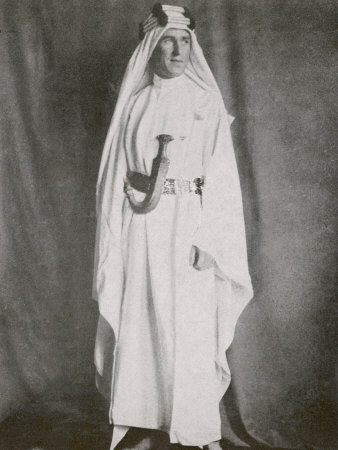
If precedent means anything the TSA will then ignore the obvious lessons – i.e. don’t let a man dressed like Lawrence of Arabia, bathed in flop-sweat and walking like he has a kielbasa up his bum, board a plane – and focus right in on mobile phones and rectums. The former will be banned from airports. No more phone calls for you. The latter, given the fact they really can’t be banned (a cause for some relief in the upper echelons of DHS), will be subject to the now-standard TSA response, further expanding the market bubble in x-ray machines and latex gloves.

As the “universal body cavity probe” takes hold, so to speak, phrases like “don’t touch my polyps” will become the viral war-cry. Janet Napolitano will issue an announcement, which by now will be a kind of fill in the blanks affair, stating that if these [enter invasive procedure here]: impromptu colonoscopies will save one life they are more than justified. She will then threaten harsh penalties for anyone who refuses to comply, without specifying what could be harsher than the thing not being complied with.

Comment: On "impromptu colonoscopies". Well if you can skip the preparation it could be advantageous!

11.16.2010

The Israelis don't use airport scanners

Has Airport Security Gone Too Far?

Excerpt:

The larger question is whether the TSA's tech-centric approach to security makes any sense at all. Even the most modest of us would probably agree to a brief flash of quasi-nudity if it would really ensure a safe flight. That's not the deal the TSA is offering. Instead, the agency is asking for Rolando Negrin-style revelations in exchange for incremental, uncertain security improvements against particular kinds of concealed weapons.

It's the same kind of trade-off TSA implicitly provided when it ordered us to take off our sneakers (to stop shoe bombs) and to chuck our water bottles (to prevent liquid explosives). Security guru Bruce Schneier, a plaintiff in the scanner suit, calls this "magical thinking . . . Descend on what the terrorists happened to do last time, and we'll all be safe. As if they won't think of something else." Which, of course, they invariably do. Attackers are already starting to smuggle weapons in body cavities, going where even the most adroit body scanners do not tread. No wonder that the Israelis, known for the world's most stringent airport security, have so far passed on the scanners.

...

The TSA uses two models of body scanner. One zaps the passenger with a tiny amount of X-rays that penetrate the clothes, but stop at the skin. The other scanner uses millimeter waves—a close cousin of microwaves—to pull off the same trick. (Regarding radiation exposure, the FDA says there's "no more than a minimal risk to people being scanned.") By measuring the direction and frequency of the waves that come back, the system can tell what's beneath a traveler's garments.

Comment: I think Janet Napolitano should be fired! The TSA is a joke and a colossal waste of money!

11.09.2010

Frisk the Turban

Indian Minister Asks Obama To End Turban Frisking

Excerpt:

An Indian lawmaker from Punjab said Tuesday she had asked President Barack Obama to put a stop to the U.S. border practice of frisking Sikh turbans.

Sikhs worldwide have long protested the American security measure as discriminatory and unnecessary in a world with machines for body scanning and metal detection.

New U.S. guidelines put into effect two weeks ago no longer require air passengers to remove turbans if doing so makes them uncomfortable, the U.S. Transport Security Administration said.

But they may still have their turbans patted down — something Sikhs say is happening increasingly amid global terror alerts. And in some cases women are asked to unpin their hair. Religious groups say it is a form of racial profiling.

The U.S. president said he would have a "close look" at the issue, parliamentarian Harsimrat Kaur Badal said Tuesday after the two spoke during an honorary dinner Sunday in New Delhi when Obama was visiting India.

"I'm very hopeful for a change. It sends a really negative message to Sikhs from the moment they step foot on American soil," she said.

"It is a humiliating experience. For us it's like telling us to remove our clothes," she said.

The turban — along with a comb, a sword, a specific undergarment and a metallic wrist bangle — are part of the required dress for Sikh men, according to the religion, which is a mix of Hindu and Islam founded in the 15th Century in Punjab. Sikh women are forbidden to cut their hair.

Men have long accepted they cannot carry a sword aboard planes, Badal said, and so have modified the religious requirement by carrying pendants or blades embedded in their comb "as a symbolic symbol."

Comment: If they can run their hands all the way up to my b*lls ... they can frisk a turban!

11.07.2010

Questions in Stowaway Case

Stowaway Has Canada and Hong Kong Scrambling

Excerpt:

*

The story of the Asian man in his 20s who stowed away aboard a Hong Kong-to-Vancouver flight continues to play prominently in newspapers and TV news broadcasts as well. And it has captivated a public puzzled over how screening staff at airports would fail to halt a person who wore a silicone mask disguised to be significantly older than his actual age of a different race.

“It is hard to tell by the photos, they are blurry, but the mask seems quite real,” said Gracy Hon, a Hong Kong makeup artist. Quick to point out that she is not an expert in special-effects makeup, Ms. Hon said it was conceivable with masks to deceive people who are rushed and not paying attention. “It did fool airline staff, after all,” she said.

On Sunday, a spokeswoman for the Hong Kong government said that the Immigration and Security authorities were still investigating how the young man managed to board an Air Canada jetliner on Oct. 29 in Hong Kong under disguise. No additional government statements would be made until the review was complete, she said.

What is known is that the man boarded the plane wearing the disguise and presenting a U.S. passport of a Caucasian man born in 1955. The aging face contrasted with the traveler’s “young-looking hands,” according to a Canadian Border Service bulletin issued over the case. Sometime during the flight the man removed his disguise, further alerting airplane staff who notified the Canadian authorities. Border officers met the man as he arrived in Vancouver.

...

Passengers are usually required to present their passports and boarding passes multiple times before boarding a plane — to guards before entering a departures hall, at metal-detection checkpoints and then to an immigration official. The final check of boarding passes and passport identification comes at the plane’s boarding gate, staffed by airline personnel.

The security checks, however, may be reduced or even useless if a passenger first arrives at the airport with his own identification, and then, once in a secure area, puts on a disguise and uses different identification.

Comment: Previous post: Airport Security Follies. I was born in '49 and I don't look that old (at least I don't think so!)

11.05.2010

Airport Security follies

Comments: Posting 2 articles. Both very interesting. More of my comments after both articles. (the 2nd article is absolutely astonishing! Check out the video with the link!)

Opt Out of a Body Scan? Then Brace Yourself

Excerpt:

HAVING been taught by nuns in grade school and later going through military boot camp, I have always disliked uniformed authorities shouting at me. So I was unhappy last week when some security screeners at O’Hare International Airport in Chicago started yelling.

“Opt out! We got an opt out!” one bellowed about me in a tone that people in my desert neighborhood in Tucson usually reserve for declaring, “Rattlesnake!”

Other screeners took up the “Opt out!” shout. I was marched from the metal detector lane to one of those nearby whole-body imagers, ordered to take everything out of my pockets, remove my belt and hold my possessions up high. Then I was required to stand still while I received a rough pat-down by a man whose résumé, I suspected, included experience at a state prison.

“Hold your pants up!” he ordered me.

What did I do to deserve this? Well, as I approached the checkpoints, I had two choices. One was a familiar lane with the metal detector, so I put my bag on that. To my right was a separate lane dominated with what the Transportation Security Administration initially called “whole-body imagers” but has now labeled “advanced imaging technology” units. Critics, of course, call them strip-search machines.

I don’t like these things, and not just because of privacy concerns or because of what some critics have asserted are radiation safety issues with some of the machines that use X-ray technology.

No, I don’t like the fact that I have to remove every item from every pocket, including my wallet and things as trivial as a Kleenex. You then strike a pose inside with your hands submissively held above your head, like some desperado cornered by the sheriff in a Western movie, while the see-through-clothes machine makes an image of your body.

The T.S.A.’s position is that anyone can “opt out” of a body scan for reasons of privacy or whatever, but will then be subjected to a thorough physical pat-down and careful search of belongings.

In my case, I had been routinely using a normal metal detector checkpoint, when I was ordered to switch lanes and instead go to one of the new machines. I said I would prefer not to, given that my carry-on bag, laptop and shoes were already trundling along the regular machine’s conveyor belt, out of sight. That’s when the shouting started.

As of Monday afternoon, the agency had not responded to several requests for comment on this. Last week, the agency did tell me that there were 317 of the advanced imaging technology machines now in use at 65 airports around the country.

About 500 should be online by the end of the year, the agency said, and another 500 are expected to be installed next year. Ultimately, the agency plans to have the new machines replace metal detectors at all of the roughly 2,000 airport checkpoints.

Exclusive: Man in disguise boards international flight

Excerpt:

Canadian authorities are investigating an "unbelievable" incident in which a passenger boarded an Air Canada flight disguised as an elderly man, according to a confidential alert obtained by CNN.

The incident occurred on October 29 on Air Canada flight AC018 to Vancouver originating in Hong Kong. An intelligence alert from the Canada Border Services Agency describes the incident as an "unbelievable case of concealment."

"Information was received from Air Canada Corporate Security regarding a possible imposter on a flight originating from Hong Kong," the alert says. "The passenger in question was observed at the beginning of the flight to be an elderly Caucasian male who appeared to have young looking hands. During the flight the subject attended the washroom and emerged an Asian looking male that appeared to be in his early 20s."

After landing in Canada, Border Services Officers (BSOs) escorted the man off the plane where he "proceeded to make a claim for refugee protection," the alert says.

"The subject initially claimed to be in possession of one bag; however, flight crew approached the BSOs with two additional pieces of luggage which were believed to belong to the subject. One bag contained the subject's personal clothing items while the second contained a pair of gloves. The third contained a 'disguise kit' which consisted of a silicone type head and neck mask of an elderly Caucasian male, a brown leather cap, glasses and a thin brown cardigan."

The man put on the disguise for the officers who "noted he very much resembled an elderly Caucasian man, complete with mimicking the movements of an elderly person. The subject admitted at this time that he had boarded the flight with the mask on and had removed it several hours later," according to the alert.

Final comments: I had my first full body scan in Charlotte yesterday. I feel sorry for the TSA agent who had to view my picture! He probably had a vomiting fit afterward! So they take a handicapped guy who cannot walk (or barely walks) without crutches. They take my belt. Somehow my pants stayed up (thankfully for all those viewing!). I have to stand with my arms above my head. I cannot hold onto anything. I am tipping forward / backward &  left and right. Ultimately I got the hand pat down anyway. This must be a fun job. The man uses the front of his hands to run up my inner thighs all the way up! For all this indignation (multiplied by hundreds of thousands of other ordinary people, handicapped people, and grannies) some guy can put on a sophisticated rubber face and get through security! Call me crazy but I see billions wasted. At MSP I used the elevator from the concourse level down to the baggage claim level. That elevator is guarded by a TSA in a chair leaning sleepily against the wall.

10.20.2008

The sham of airport security

MSP OKs passenger with fake pass, Bin Laden shirt

Excerpt:

A first-class Twin Cities traveler was allowed to board a Northwest Airlines flight to the nation's capital this summer with a fake boarding pass, no photo identification and wearing an Osama bin Laden T-shirt under his coat as part of a test of airport security in this post-9/11 world.

The breach of security, assisted by longtime airport security critic Bruce Schneier, is outlined in a first-person account in the November issue of Atlantic magazine. The article was written to illustrate that the federal Transportation Security Administration "represents an egregious waste of tax dollars," author Jeffrey Goldberg wrote.


The Things He Carried

Excerpts:

He had made these boarding passes in his sophisticated underground forgery works, which consists of a Sony Vaio laptop and an HP LaserJet printer, in order to prove that the Transportation Security Administration, which is meant to protect American aviation from al-Qaeda, represents an egregious waste of tax dollars, dollars that could otherwise be used to catch terrorists before they arrive at the Minneapolis–St. Paul International Airport, by which time it is, generally speaking, too late.

...

As we stood at an airport Starbucks, Schnei­er spread before me a batch of fabricated boarding passes for Northwest Airlines flight 1714, scheduled to depart at 2:20 p.m. and arrive at Reagan National at 5:47 p.m. He had taken the liberty of upgrading us to first class, and had even granted me “Platinum/Elite Plus” status, which was gracious of him. This status would allow us to skip the ranks of hoi-polloi flyers and join the expedited line, which is my preference, because those knotty, teeming security lines are the most dangerous places in airports: terrorists could paralyze U.S. aviation merely by detonating a bomb at any security checkpoint, all of which are, of course, entirely unsecured. (I once asked Michael Chertoff, the secretary of Homeland Security, about this. “We actually ultimately do have a vision of trying to move the security checkpoint away from the gate, deeper into the airport itself, but there’s always going to be some place that people congregate. So if you’re asking me, is there any way to protect against a person taking a bomb into a crowded location and blowing it up, the answer is no.”)

Schnei­er and I walked to the security checkpoint. “Counter­terrorism in the airport is a show designed to make people feel better,” he said. “Only two things have made flying safer: the reinforcement of cockpit doors, and the fact that passengers know now to resist hijackers.” This assumes, of course, that al-Qaeda will target airplanes for hijacking, or target aviation at all. “We defend against what the terrorists did last week,” Schnei­er said. He believes that the country would be just as safe as it is today if airport security were rolled back to pre-9/11 levels. “Spend the rest of your money on intelligence, investigations, and emergency response.”

Schnei­er and I joined the line with our ersatz boarding passes. “Technically we could get arrested for this,” he said, but we judged the risk to be acceptable. We handed our boarding passes and IDs to the security officer, who inspected our driver’s licenses through a loupe, one of those magnifying-glass devices jewelers use for minute examinations of fine detail. This was the moment of maximum peril, not because the boarding passes were flawed, but because the TSA now trains its officers in the science of behavior detection. The SPOT program—“Screening of Passengers by Observation Techniques”—was based in part on the work of a psychologist who believes that involuntary facial-muscle movements, including the most fleeting “micro-expressions,” can betray lying or criminality. The training program for behavior-detection officers is one week long. Our facial muscles did not cooperate with the SPOT program, apparently, because the officer chicken-scratched onto our boarding passes what might have been his signature, or the number 4, or the letter y. We took our shoes off and placed our laptops in bins. Schnei­er took from his bag a 12-ounce container labeled “saline solution.”

...

As I stood in the bathroom, ripping up boarding passes, waiting for the social network of male bathroom users to report my suspicious behavior, I decided to make myself as nervous as possible. I would try to pass through security with no ID, a fake boarding pass, and an Osama bin Laden T-shirt under my coat. I splashed water on my face to mimic sweat, put on a coat (it was a summer day), hid my driver’s license, and approached security with a bogus boarding pass that Schnei­er had made for me. I told the document checker at security that I had lost my identification but was hoping I would still be able to make my flight. He said I’d have to speak to a supervisor. The supervisor arrived; he looked smart, unfortunately. I was starting to get genuinely nervous, which I hoped would generate incriminating micro-expressions. “I can’t find my driver’s license,” I said. I showed him my fake boarding pass. “I need to get to Washington quickly,” I added. He asked me if I had any other identification. I showed him a credit card with my name on it, a library card, and a health-insurance card. “Nothing else?” he asked.

“No,” I said.

“You should really travel with a second picture ID, you know.”

“Yes, sir,” I said.

“All right, you can go,” he said, pointing me to the X-ray line. “But let this be a lesson for you.”


Comment: View 2nd article for pictures of "what he carried on". Article is just in time for my next flying experience - to Hartford this Friday.