Frank Garlock's weird views

- David Cloud: A Salute to Frank Garlock
- Greg Howlett

- Gregg Strawbridge: A Biblical Theology of Music Applied to the Contemporary Music Styles Debate

Comments:


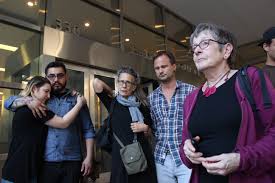


Kathee had lunch today with Matt's mother (1/3)
— 𝓙𝓲𝓶 𝓟𝓮𝓮𝓽 (@jrpeet) August 16, 2019
Matthew Eli von Ohlenhttps://t.co/UkSnO3BrbF pic.twitter.com/JLotJEafPg
Matthew Eli von Ohlen (2/3)https://t.co/xCC2737J54 pic.twitter.com/TMXMRZmp6F
— 𝓙𝓲𝓶 𝓟𝓮𝓮𝓽 (@jrpeet) August 16, 2019

The first thing we ought to consider is that apostates are self-deceived. Years before a man or woman apostacizes, he or she would probably be shocked to hear what their future holds. This is to say, while there are always some “wolves in sheep’s clothing” within the church—people who know they hate God but pretend to love him—apostates generally deceive themselves before they deceive others. There is a time in their lives in which they are convinced they are truly saved. They live like Christians because they believe they are Christians. This being the case, we don’t need to think that those who have fallen away knew they were unsaved all along. Rather, we believed they were saved because they believed they were saved and even provided some evidence of it. This puts the call on each of us to ensure that we are not self-deceived but that we have genuinely come to Christ in repentance and faith. Their apostasy provides us the crucial opportunity to examine our own hearts before the Lord.Comment: good read
Second, apostasy should not surprise us. We should expect that a certain number of people will fall away—even people who showed convincing evidence of salvation, who displayed what seemed to be Christian character, and who held positions of prominence. This is not the same as saying we should expect that any particular individual will fall away. But it should not surprise us that some people are self-deceived and, therefore, deceive us. It does not necessarily mean that we, as the wider church, have done anything wrong or failed to carry out any duty. If the Apostle Paul lost some of his disciples to apostasy, which he did, it should not surprise us if we lose some of ours. It still shocks us, of course, when when learn it is this man or that woman. But in big picture, we have to expect that while many will endure, there will be some who fall away, and even some who have written good books or composed good songs or preached good sermons. These recent examples are certainly not the first in the history of Christianity and will unfortunately not be the last.
Third, trajectories matter. It is rare that people apostacize all of a sudden. Rather, there will almost always have been a long trajectory away from genuine Christian faith and practice and toward distinctly unChristian faith and practice. I expect that those who knew these men well, those who saw their lives up close, could tell of a slow drift rather than a sudden deconversion. We are all people of trajectories who wittingly or unwittingly, deliberately or carelessly, point ourselves along the narrow way that leads to salvation or the broad way that leads to destruction. This demonstrates the importance of having people in our lives who will confront and redirect us not just when we’ve gone past the point of no return, but at the point we begin to go astray, even by small degrees. This also demonstrates the importance of having a vital relationship with God and a sensitivity to his Spirit as he examines, confronts, and assures us. “Prove me, O Lord, and try me; test my heart and my mind” (Psalm 26:2).


we can see both sides of the cube working together. While God desires – and has revealed to us as his will (thelō) – that all are saved, he has decreed, or ordained (boulomai), that only the elect will be saved.Comment: Explains it
Six inconvenient truths about the U.S. and slavery
Why Reparations Will Actually Hurt Black America https://t.co/YZVOIXWGEx via @YouTube— 𝓙𝓲𝓶 𝓟𝓮𝓮𝓽 (@jrpeet) August 12, 2019
Montage: Trump condemns racism, hatred, & white nationalism throughout his first term pic.twitter.com/aqP1IYYN5t— Tom Elliott (@tomselliott) August 11, 2019


The myth that President Trump is a kloset Klansman is the Left’s relentless refrain. The first headline T-boned into this lie. And the lie won. This nonstop lie almost totally has eclipsed the fact that Trump has fought hate, racism, and anti-Semitism since before his candidacy:Comment: Note the change in the NYTimes front pages (Edition #1 to #2)
Debunking The 'Trump is a Racist' Myth—Larry Elder https://t.co/TTEiGxMRfH via @YouTube— 𝓙𝓲𝓶 𝓟𝓮𝓮𝓽 (@jrpeet) August 12, 2019
Hate has no place in America. https://t.co/GQfVprhGG2
— The White House (@WhiteHouse) August 12, 2019


“Renewable energy” is a misnomer. Wind and solar machines and batteries are built from nonrenewable materials. And they wear out. Old equipment must be decommissioned, generating millions of tons of waste. The International Renewable Energy Agency calculates that solar goals for 2050 consistent with the Paris Accords will result in old-panel disposal constituting more than double the tonnage of all today’s global plastic waste. Consider some other sobering numbers:
A single electric-car battery weighs about 1,000 pounds. Fabricating one requires digging up, moving and processing more than 500,000 pounds of raw materials somewhere on the planet. The alternative? Use gasoline and extract one-tenth as much total tonnage to deliver the same number of vehicle-miles over the battery’s seven-year life.
When electricity comes from wind or solar machines, every unit of energy produced, or mile traveled, requires far more materials and land than fossil fuels. That physical reality is literally visible: A wind or solar farm stretching to the horizon can be replaced by a handful of gas-fired turbines, each no bigger than a tractor-trailer.
Building one wind turbine requires 900 tons of steel, 2,500 tons of concrete and 45 tons of nonrecyclable plastic. Solar power requires even more cement, steel and glass—not to mention other metals. Global silver and indium mining will jump 250% and 1,200% respectively over the next couple of decades to provide the materials necessary to build the number of solar panels, the International Energy Agency forecasts. World demand for rare-earth elements—which aren’t rare but are rarely mined in America—will rise 300% to 1,000% by 2050 to meet the Paris green goals. If electric vehicles replace conventional cars, demand for cobalt and lithium, will rise more than 20-fold. That doesn’t count batteries to back up wind and solar grids. ...
The demand for minerals likely won’t be met by mines in Europe or the U.S. Instead, much of the mining will take place in nations with oppressive labor practices. The Democratic Republic of the Congo produces 70% of the world’s raw cobalt, and China controls 90% of cobalt refining. The Sydney-based Institute for a Sustainable Future cautions that a global “gold” rush for minerals could take miners into “some remote wilderness areas [that] have maintained high biodiversity because they haven’t yet been disturbed.”
What’s more, mining and fabrication require the consumption of hydrocarbons. Building enough wind turbines to supply half the world’s electricity would require nearly two billion tons of coal to produce the concrete and steel, along with two billion barrels of oil to make the composite blades. More than 90% of the world’s solar panels are built in Asia on coal-heavy electric grids.
Engineers joke about discovering “unobtanium,” a magical energy-producing element that appears out of nowhere, requires no land, weighs nothing, and emits nothing. Absent the realization of that impossible dream, hydrocarbons remain a far better alternative than today’s green dreams.

The country’s two largest newspaper chains agreed to combine their businesses in a roughly $1.4 billion deal, further consolidating an industry reeling from strong economic headwinds.
New Media Investment Group Inc., NEWM -5.61% the parent of GateHouse Media, is buying Gannett Co. in a cash and stock transaction, the companies said Monday. New Media will pay $6.25 in cash and 0.5427 New Media share for a total of $12.06 for each Gannett share.
The deal combines the largest owner of U.S. newspapers by titles—GateHouse, with 400 papers and a total circulation of 4.29 million—and the largest newspaper group by circulation—Gannett, with a circulation of 4.32 million and 215 titles including USA Today, according to a University of North Carolina study.
.@Ill_Mindst8
— 𝓙𝓲𝓶 𝓟𝓮𝓮𝓽 (@jrpeet) August 2, 2019
I wish my children were this industrious :) https://t.co/wQvOkcv3uq

This is the story of a lovely place, where green grass grows and sparkling water flows.
Where the children are sturdy and smart, the stores are bustling and the government is scandal-free.
And the rest of us can’t stand it.
...
Go to the Urban Dictionary, perhaps the Internet’s No. 1 destination for an unfiltered look at what people really mean when they talk.
The top definition for “cake eater” — ahead of even Marie Antoinette — describes Edina.
Edina is wealthy, but not the wealthiest town in the Twin Cities. Woodbury, Chanhassen, Eden Prairie and Maple Grove, among others, all have higher median household incomes.
Edina’s schools are excellent, but U.S. News & World Report ranks Edina High School at No. 10 in the state. Mounds View, Eagan, Wayzata and Eastview in Apple Valley all are ranked higher.
So why the hate?
Perhaps it’s because Edina combines the things that have long symbolized the American dream — nice homes, tree-shaded streets, good schools — and hasn’t ever let go of them.
“There is always a little bit of hate that goes with the envy,” said Iric Nathanson, a Minneapolis historian and author. “And that is why some people may hate Edina.
“They really envy Edina, because it is the embodiment of the good life — at least as we think the good life should be here in Minnesota.”
‘We achieved Edina’
Edina as a target goes back for generations.
On March 21, 1975, the Minneapolis Tribune ran a cartoon by its talented humorist, Richard Guindon.
In the single-panel comic, a mother leans in earnestly to address her young son, perched on a wicker chair surrounded by hanging plants.
“Daddy and I weren't born in Edina, dear,” she says. “We achieved Edina.” Guindon, now retired and living in Michigan, said he was completely unprepared for the response to the cartoon.
“The feedback just blew me away,” he said in an interview. Of all the cartoons he drew, rarely did any have the staying power of that one.
“People remembered the Edina thing when I had forgotten it,” he said with a chuckle. “So you wonder sometimes, what did you inadvertently do to tap a vein of something that seemed to work for people?”
In fact, he almost didn’t draw it in the first place.
“This was a note I had on my drawing board for maybe two years,” he said. “And I never drew the ‘achieved Edina’ thing because I didn’t think it was a joke. It was just a statement of fact, so to speak.”


Mohammad claimed to be the last and greatest prophet, having received a revelation from God, which became known as The Koran. He wanted to restore pure worship of one true God and be rid of all idols. Going against the Bible, he claimed that Jesus was a prophet, but not God Incarnate. All must submit to Allah in every area of life and have a strict pattern of obedience: (1) confess God and Mohammad as his prophet, (2) give a percentage of one’s income to the Mosque, (3) go on pilgrimage to Mecca once in a lifetime, (4) pray five times a day, (5) observe the Ramadan fast every year.
Muslims hope that their good works will outweigh their bad works so that they may attain eternal paradise. If not, they go to hell forever. But no Muslim can be sure, unless they die in a jihad. Then paradise is assured. It is a place of earthly delights oriented toward male desires. But Allah is not there, since he is utterly transcendent. To associate anything with Allah, especially Jesus, is the unforgivable sin, according to Islam.
Jesus claimed to be a prophet, but more than a prophet. He was the revelation of God himself in the flesh, full of grace and truth. Jesus proclaimed, “Anyone who has seen me has seen the Father!” (John 14:9). Instead of denying crucial teachings in the Bible, Jesus fulfilled the biblical promise of the coming Messiah, who would rescue his people and establish a Kingdom that could not be shaken. Jesus taught that there was one true God and that he made the Father known to the world.
Instead of demanding that his followers be saved by adding up good works, Jesus offered himself as the only way to God and faith as in him the way of forgiveness and eternal life. He said, “I am the way, and the truth, and the life. No one comes to the Father except through me” (John 14:6). While Islam denies that Jesus died on the Cross (against all historical evidence), Jesus wascrucified in our place and for our sins. By turning away from our selfishness and toward him in faith, we receive what we could never earn through good works. We find new life to live each day in the power of Christ within us! Unlike the Islamic paradise, God’s final Kingdom is a place of fellowship with God himself. He will raise us up and fill us with the joy perfect love.

We Irish hear about death at an early age, and the experience stays with us. As kids we learn to pray the Hail Mary, which ends with the beseeching request that we be remembered “now and at the hour of our death.” In my teens the prayer of Cardinal John Henry Newman was offered at each vespers service at my boarding school, closing with the line, “Then in his mercy may he grant us a safe lodging, a holy rest and peace at the last.” So when I was recently told that I likely have leukemia, my immediate reaction was, “So this is what it feels like to begin the process of dying.”
I understand that dying begins at birth, but I am 81 and fortunate to have been afforded longevity. I can have no regrets. My diagnosis means the game of life is turning serious and the late innings loom. Perhaps my leukemia will turn out to be the “good” type that is slow moving and not as virulent as some forms of blood cancer. Perhaps not.
My challenge is to seize what time I have left. I will try to be responsible to my wife, family and friends. I will try to avoid becoming the old man in the corner who requires constant attention and care. I cannot let the way my life comes to an end destroy the way I would like to be remembered. Dying is still a part of living, and the way one lives is vital, even in the dying light.
In a culture that so values bright teeth, glowing skin, trim bodies and flowing hairstyles, we elderly try to find ways to stay relevant. In fact, we can offer only the wisdom of experience. If I spend a few hours with the young, maybe I can share some lessons I learned at bitter cost. Maybe I can talk of my mistakes and awkward stumbles. Maybe I can assure the young that wisdom is the daughter of failure yet the mother of success. I remember the acrid tastes of failures, but I quickly forgot the whiff of a success.
As I try to live while confronting an incurable illness, I remember how much I enjoyed the youthful process of learning. Thus I now read and learn from every book possible. I remember one of Blaise Pascal’s “Pensées,” in my own translation: “Man is but a reed, the weakest in nature. A puff of gas, a drop of water is sufficient to kill him. But the difference between him and what kills him is that he knows he is dying.”


