Showing posts with label Labor Unions. Show all posts

11.26.2012

Frank "Not-Hurt"


The sweet life of Bakery Union officials
Excerpt:


Soon to be or newly jobless Bakery, Confectionery, Tobacco Workers and Grain Millers Union members who work(ed) at Twinkie and Ding Dong maker Hostess Baking are contemplating a bleak Christmas that not even a trip to low cost, non union WalMart can alleviate. However the Bakery Workers' union's officials are quite comfortable
Comment: Out of touch union leaders!

2.04.2012

Let's hear it for Muncie!

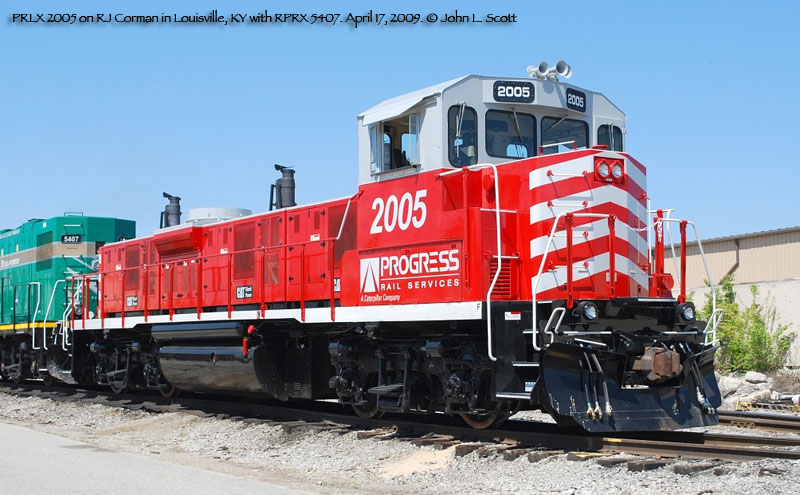
Caterpillar Closes Plant in Canada After Lockout

 Excerpt:
Bulldozing its way through a high-profile dispute over wages, Caterpillar Inc. said Friday it will close a 62-year-old plant in London, Ontario, that makes railroad locomotives, eliminating about 450 manufacturing jobs that mostly paid twice the rate of a U.S. counterpart. Caterpillar's decision, ending a standoff with locked-out workers huddled around barrels of burning scrap wood outside the London factory gates, may benefit another downtrodden manufacturing city: Muncie, Ind., where Caterpillar last year opened a locomotive plant and where it is trying to fill jobs at about half the pay workers in Ontario received.

At a job fair in Muncie Saturday, Caterpillar will be offering jobs at that plant at wages ranging from $12 to $18.50 per hour. Wages for most workers at the Ontario plant are about 35 Canadian dollars an hour (US$35.03). "The cost structure of the operation (in Ontario) was not sustainable and efforts to negotiate a new, competitive collective agreement were not successful," Caterpillar said in a statement Friday morning. It added: "The gulf between the company and the union was too wide to resolve."

... Caterpillar's announcement came on the same day Canada released much-worse-than-expected jobs data, underscoring its tenuous economy. Canadian employers hired far fewer workers than expected in January, adding just 2,300 net new jobs, and the jobless rate rose unexpectedly from 7.5% to 7.6%, the highest level since April 2011, Statistics Canada said.

... Caterpillar has made clear it hopes to avoid any union representation at the Muncie plant. Last year, an online job advertisement published by the company sought human-resources managers with "experience with providing union-free culture and union avoidance." In an effort to attract more union-shy employers, Indiana Gov. Mitch Daniels on Wednesday signed a "right-to-work law," barring labor contracts that require all workers to pay union dues. Mr. Julian, the county economic-development official, said site-selection experts for manufacturing plants have told him that about 30% of such projects specify that the factories go to states with right-to-work laws. "We obviously want to compete for those," he said. Indiana this week became the 23rd state with such a law and the first to enact one since Oklahoma did a decade ago.
Comments: Image source. This week Republicans in Minnesota introduced the "right to work" concept as a constitutional amendment. Would be good for Minnesota!

2.28.2011

Collective bargaining on a broad scale is more similar to an antitrust violation than to a civil liberty

Unions vs. the Right to Work

Excerpt:

Labor unions like to portray collective bargaining as a basic civil liberty, akin to the freedoms of speech, press, assembly and religion. For a teachers union, collective bargaining means that suppliers of teacher services to all public school systems in a state—or even across states—can collude with regard to acceptable wages, benefits and working conditions. An analogy for business would be for all providers of airline transportation to assemble to fix ticket prices, capacity and so on. From this perspective, collective bargaining on a broad scale is more similar to an antitrust violation than to a civil liberty.

...

The national fiscal crisis and recession that began in 2008 had many ill effects, including the ongoing crises of pension and health-care obligations in many states. But at least one positive consequence is that the required return to fiscal discipline has caused reexamination of the growth in economic and political power of public-employee unions. Hopefully, embattled politicians like Gov. Walker in Wisconsin will maintain their resolve and achieve a more sensible long-term structure for the taxpayers in their states.

Comment: good read

2.27.2011

Cheese Head Teachers

Oh, To Be a Teacher in Wisconsin

Excerpts:

The average Milwaukee public-school teacher salary is $56,500, but with benefits the total package is $100,005, according to the manager of financial planning for Milwaukee public schools. When I showed these figures to a friend, she asked me a simple question: "How can fringe benefits be nearly as much as salary?" The answers can be found by unpacking the numbers in the district's budget for this fiscal year:
  • State Pension. Teachers belong to the Wisconsin state pension plan. That plan requires a 6.8% employer contribution and 6.2% from the employee. However, according to the collective-bargaining agreement in place since 1996, the district pays the employees' share as well, for a total of 13%.
  • Teachers' Supplemental Pension. In addition to the state pension, Milwaukee public-school teachers receive an additional pension under a 1982 collective-bargaining agreement. The district contributes an additional 4.2% of teacher salaries to cover this second pension. Teachers contribute nothing.
  • Classified Pension. Most other school employees belong to the city's pension system instead of the state plan. The city plan is less expensive but here, too, according to the collective-bargaining agreement, the district pays the employees' 5.5% share.

    Overall, for teachers and other employees, the district's contributions for pensions and Social Security total 22.6 cents for each dollar of salary. The corresponding figure for private industry is 13.4 cents. The divergence is greater yet for health insurance:
  • Health care for current employees. Under the current collective- bargaining agreements, the school district pays the entire premium for medical and vision benefits, and over half the cost of dental coverage. These plans are extremely expensive.

    This is partly because of Wisconsin's unique arrangement under which the teachers union is the sponsor of the group health-insurance plans. Not surprisingly, benefits are generous. The district's contributions for health insurance of active employees total 38.8% of wages. For private-sector workers nationwide, the average is 10.7%.

If the president is so upset with Wisconsin's labor law reforms, why won't he allow federal workers to bargain collectively?

Excerpt:

The union horde is spreading, from Madison to Indianapolis to a state capital near you. And yet the Democratic and union bigwigs engineering the outrage haven't directed their angry multitudes at what is arguably the most "hostile workplace" in the nation: Washington, D.C.

It will no doubt surprise you to learn that President Obama, the great patron of the working man, also happens to be the great CEO of one of the least union-friendly shop floors in the nation.

This is, after all, the president who has berated Wisconsin Gov. Scott Walker's proposal to limit the collective bargaining rights of public employees, calling the very idea an "assault on unions." This is also the president who has sicced his political arm, Organizing for America, on Madison, allowing the group to fill buses and plan rallies. Ah, but it's easy to throw rocks when you live in a stone (White) house.

Fact: President Obama is the boss of a civil work force that numbers up to two million (excluding postal workers and uniformed military). Fact: Those federal workers cannot bargain for wages or benefits. Fact: Washington, D.C. is, in the purest sense, a "right to work zone." Federal employees are not compelled to join a union, nor to pay union dues. Fact: Neither Mr. Obama, nor the prior Democratic majority, ever acted to give their union chums a better federal deal.

Out of Wisconsin, a lesson in leadership for Obama

Excerpts:

A few days after President Obama submitted a budget that would increase the federal deficit, he tried to sabotage Wisconsin's progress toward solvency. The Washington Post: "The president's political machine worked in close coordination . . . with state and national union officials to mobilize thousands of protesters to gather in Madison and to plan similar demonstrations in other state capitals." Walker notes that in the 1990s, Wisconsin was a trendsetter regarding school choice and welfare reform. Obama, he thinks, may be worried that Wisconsin might again be a harbinger.

...

Walker, by a fiscal seriousness contrasting with Obama's lack thereof, and Obama, by inciting defenders of the indefensible, have made three things clear:

First, the Democratic Party is the party of government, not only because of its extravagant sense of government's competence and proper scope, but also because the party's base is government employees. Second, government employees have an increasingly adversarial relationship with the governed. Third, Obama's "move to the center" is fictitious.

Comment: Of the three articles the first (please read the whole) is a real eye opener. I personally am not opposed to unions but when there is a symbiotic relationship between unions and government disaster ensues. Governor Walker offered some good advice to Obama: "The president really ought to concentrate on the $1.65 trillion deficit on the national level ... rather than put his nose in Wisconsin’s business"

10.22.2010

Close union vote at Jimmy Johns

Fast-Food Employees Reject Union Effort in a Narrow Vote

Excerpt:

The [Minneapolis area ] workers voted against joining the Industrial Workers of the World, which was a powerful, far-left union a century ago, but now is far smaller and weaker and often seeks to organize groups of workers that other unions overlook.

Among the votes cast, 87 were against the union, 85 for, with 2 challenged ballots. The challenged ballots would not affect the outcome because the union needs a majority to win. The results are final, but parties have seven days to file objections before the results are certified. Erik Forman, one of the leading pro-union employees, said the union would file objections, accusing management of unfair labor practices, to ask for a new vote.

Supporters of the union’s effort vowed to try to unionize fast-food workers in other cities if the union won in Minneapolis. The campaign focused on 10 Jimmy John’s shops in the Minneapolis area. The stores compete with Subway and Quiznos and are owned by Mike Mulligan, a retired senior vice president at Supervalu, the national grocery company.

During the organizing drive, many workers complained about low pay, at the $7.25-an-hour minimum wage or slightly above. They also said they had short, often unpredictable shifts, and were disciplined when they called in sick.

Before the vote, union supporters were predicting victory, noting that about 60 percent of the restaurants’ 200 workers had signed pro-union cards asking the labor board to hold a unionization vote.

Mr. Mulligan fought the organizing drive, hiring an antiunion consultant, the Labor Relations Institute, to meet with his employees and urge them to vote against joining the union. Mr. Mulligan said that the I.W.W., commonly known as the Wobblies, was a “socialist-anarchist organization” that “preaches the overthrow of capitalism.”

The I.W.W. has been seeking, with little success, to unionize Starbucks shops in recent years.

Comment: More on the I.W.W. here. Also of interest is "Wobbly Lingo"

11.16.2008

Multiple views on Detroit bailout

If Detroit Falls, Foreign Makers Could Be Buffer

Excerpts:

many industry experts say the big foreign makers are established enough to take control of the industry and its vast supplier network more quickly than is widely understood.

“You would have an auto industry in the United States more like that of Mexico and Canada: foreign-owned,” said Sean McAlinden, chief economist at the Center for Automotive Research in Ann Arbor, Mich., which describes itself as a nonprofit organization that has “strong relationships with industry, government agencies, universities, research institutes, labor organizations” and other groups with an interest in the auto business.

The transition to that new equilibrium would surely be painful. The big American companies employ about 240,000 workers, and their suppliers an additional 2.3 million, amounting to nearly 2 percent of the nation’s work force.

The outright failure of General Motors would eliminate the biggest auto employer and more than 100,000 manufacturing jobs. That is roughly the number of jobs already lost this year at the nation’s automakers and their suppliers.

...

the new kings of the auto industry would presumably be Toyota, Honda, Nissan, Volkswagen, Ford, Mercedes-Benz, BMW and Hyundai-Kia. (Volkswagen has not yet opened a plant in the United States, and BMW and Hyundai each have one plant.)

Like the Big Three, they would together dominate manufacturing in the United States, becoming big customers for steel, aluminum, plastics, glass, machine tools, computer chips and rubber.


UAW head says that unions aren't to blame for Detroit's problems

Excerpt:

Rather than admit that the UAW's plum labor agreements and contentious negotiations have contributed to the current gloomy situation, the United Auto Workers head man says that the economic downturn is to blame for everything, and that Congress should approve loans to the auto industry, saying "We cannot afford to...see this industry collapse."


An America without manufacturing becomes a starkly divided society

Excerpt:

I am a black child of the Deep South who watched legions of neighbors and relatives flee economic apartheid in pursuit of opportunity in the automobile factories of Michigan and Ohio and in the steel plants of Pennsylvania and Indiana.

Those black men and women often were assigned the dirtiest, most dangerous, least desirable jobs in those factories. But if whites happened to be working alongside them, they tended to be paid equally for the same tasks. There was hope for the future in that treatment, a quantum of dignity.

That hope and dignity eventually became codified in contracts between the car companies and the United Auto Workers union, as it did between other manufacturing entities and their labor organizations.

But, alas, hope and dignity were corrupted by greed on both sides -- on the part of unions that always wanted more, and on the part of domestic car companies, which became more interested in building Wall Street portfolios than they were in turning out cars and trucks of superior quality.

People make mistakes. But redemption is found in the good that they do, and the domestic automobile industry has done a lot of tangible good for this nation.

The American Three -- General Motors, Ford and Chrysler -- largely have been responsible for the development of a black middle class in this country. Many children of factory workers followed their parents onto automobile assembly lines. But many others went to colleges and universities, medical and technical schools, thanks to good UAW salaries and educational benefits.


Comment: Interjecting race into the auto bailout issue. Keep race out of it!

G.O.P. Senators Oppose Auto Bailout

Excerpts:

Top Republican senators said Sunday they will oppose a Democratic plan to bail out Detroit automakers, calling the U.S. industry a “dinosaur” whose “day of reckoning” is coming. Their opposition raises serious doubts about whether the plan will pass in this week’s postelection session.

...

Senators Richard Shelby of Alabama and Jon Kyl of Arizona said it would be a mistake to use any of the Wall Street rescue money to prop up the automakers. They said an auto bailout would only postpone the industry’s demise.

“Companies fail every day and others take their place. I think this is a road we should not go down,” said Mr. Shelby, the senior Republican on the Senate Banking, Housing and Urban Affairs Committee.

“They’re not building the right products,” he said. “They’ve got good workers, but I don’t believe they’ve got good management. They don’t innovate. They’re a dinosaur in a sense.”

Mr. Kyl, the Senate’s second-ranking Republican, added, “Just giving them $25 billion doesn’t change anything. It just puts off for six months or so the day of reckoning.”


Comments: Good to see the GOP offer some common sense. Recent "innovations" of the big three: Hummer, the new Camaro, the new Dodge Challenger, the Chevrolet Avalanche. My own conclusion: let GM file for chapter 11. Let them innovate through restructuring.

8.27.2008

Labor's undemocratic agenda

Big Labor's Comeback

Excerpt:

.... rewriting federal law to promote union organizing is now near the top of the Democratic agenda. The main vehicle is "card check" legislation, which would eliminate the requirement for secret ballots in union elections. Unable to organize workers when employees can vote in privacy, unions want to expose those votes to peer pressure, and inevitably to public intimidation. This would arguably be the biggest change to federal labor law since the Taft-Hartley Act in 1947. The Democratic House passed card check last year, and Mr. Obama has pledged his support. With a few more Senators, it might pass.

Card check is merely the start. Next on the agenda is a campaign to repeal "right to work" laws in the 22 U.S. states that have them. Right to work laws allow employees to decide for themselves whether to join or financially support a union. Former Michigan Congressman David Bonior told a union event in Denver on Monday that limiting right to work laws is essential both to lifting union membership and promoting more Democratic political victories. He pointed out that John Kerry didn't win a single right to work state in 2004, while Al Gore won only one -- Iowa -- and only by a few thousand votes in 2000.

This point is crucial to understanding labor's new Democratic clout. States with more union households tend to be more Democratic. And groups like the Service Employees International Union and the AFL-CIO will pour hundreds of millions of dollars, and endless man hours, into getting Democrats elected this year. Those resources have simply overwhelmed the 1990s New Democrat movement that tried to tug the party toward freer trade and public-sector reform.

The question for Americans more broadly is whether a return to widespread unionization is really the way to raise middle-class incomes. The case for card check is that, amid global competition, the balance of organizing power has shifted to business. Giving unions more power will redress this imbalance and let workers grab a higher share of corporate profits.

But this claim is highly suspect, given the record in autos, steel and the rest of unionized American manufacturing. The only sector of the U.S. auto industry that is prospering is the part not organized by the United Auto Workers. Likewise, Europe, with its high jobless rates and slow growth, argues against unionization as a way to lift middle-class incomes. To the extent a country like Germany has modestly reversed some of this, it has been the result of recent labor-law reforms and labor concessions.

As for the U.S., the states with right to work laws have performed better economically for workers of all types. The Mackinac Center for Public Policy has shown that right to work states over the past 30 years have lower unemployment, higher rates of job creation, and faster growth in GDP and per-capita personal income than states with compulsory union membership. Colorado is hoping to get in on this success, with a high-profile ballot initiative this fall that would make it a right to work state.

We have long believed that if workers want to form a union, they have every right to do so. And businesses that get a union often deserve what they get. What Americans need to know this November is that the Democratic Party wants to make it that much more difficult for them not to join a union.


Comment: I don't know what's so hard about these concepts: If I vote in a union election, my vote should be private. And if I don't want to be in a union, I shouldn't be forced to! By the way (and this is coming from a guy with 2 Chevy's! This same guy has only owned 1 foreign car ... a VW bug while I was in college!) - Unions have done much to sink the big three.