Showing posts with label Consumerism. Show all posts

2.01.2009

Shopping: From "fugue state" to "essentials-only mode"

Recession Can Change a Way of Life

Excerpts:

Many studies have shown that when a job is harder to find or less lucrative, people spend more time on self-improvement and relatively inexpensive amusements. During the Depression of the 1930s, that meant listening to the radio and playing parlor and board games, sometimes in lieu of a glamorous night on the town. These stay-at-home tendencies persisted through at least the 1950s.

In today’s recession, we can also expect to turn to less expensive activities — and maybe to keep those habits for years. They may take the form of greater interest in free content on the Internet and the simple pleasures of a daily walk, instead of expensive vacations ...

..

Recessions and depressions, of course, are not good for mental health. But it is less widely known that in the United States and other affluent countries, physical health seems to improve, on average, during a downturn. Sure, it’s stressful to miss a paycheck, but eliminating the stresses of a job may have some beneficial effects. Perhaps more important, people may take fewer car trips, thus lowering the risk of accidents, and spend less on alcohol and tobacco. They also have more time for exercise and sleep, and tend to choose home cooking over fast food.

...
In addition to trying to get out of the recession — our first priority — many of us will be making do with less and relying more on ourselves and our families. The social changes may well be the next big story of this recession.


Comment: Maybe some of these changes will be good in the long run! Next article highlights the Mall of America (from the NYTimes):

Our Love Affair With Malls Is on the Rocks

Excerpt:

... [The] Mall of America [is] a convenient starting point for rethinking the 50-year marriage between the American shopper and the American mall.

...

Here, ladies and gentlemen, is the crux of the problem: We are reliably informed that whatever part of the economic crisis can’t be pinned on Wall Street — or on mortgage-related financial insanity — can be pinned on consumers who overspent. But personal consumption amounts to some 70 percent of the American economy. So if we don’t spend, we don’t recover. Fiscal health isn’t possible until money is again sloshing into cash registers, including those at this mall and every other retailer.

In other words, shopping was part of the problem and now it’s part of the cure. And once we’re cured, economists report, we really need to learn how to save, which suggests that we will need to quit shopping again.

...

At Web sites like deadmalls.com, the carcasses of these abandoned buildings are photographed and toe-tagged, along with tributes from former shoppers. All this as the worst retail environment in decades continues to sag in a sickly economy.

...

The economic crisis has caused shoppers to go into an essentials-only mode. But the mall has never trafficked in essentials. You can’t, for instance, fill a prescription at the Mall of America, because it doesn’t have a pharmacy. You can, however, buy a vanilla hazelnut fragrance candle in the shape of a miniature cooking skillet. Or a $13 baseball hat that looks as though it’s made of cheddar cheese. A store called Corda-Roy’s sells a variety of bean bags that convert into beds. Magnet Max sells a battery-operated guinea pig that runs continuously on a spinning exercise wheel.

...

SPEND enough hours in the Mall of America and you wind up in a sort of fugue state in which the specifics of time and place turn fuzzy. The hope, one assumes, is that you’ll spend more freely in this alternative universe of nonstop distractions.


Comment: From deadmalls.com view the story of Western Woods Mall (Cincinnati) where I worked as a shoe salesmen at Bakers Shoes in the late '60s. Re: "shopping was part of the problem and now it’s part of the cure": A low savings rate is the problem. Tax policies that "disincent" (deter) savings and investment hurt individuals and our society in the long run. This article is somewhat dated (January 2006) but discusses that issue: U.S. savings rate hits lowest level since 1933 - Consumers depleting savings to buy cars, other big-ticket items: "The Commerce Department reported Monday that the savings rate fell into negative territory at minus 0.5 percent, meaning that Americans not only spent all of their after-tax income last year but had to dip into previous savings or increase borrowing. The savings rate has been negative for an entire year only twice before — in 1932 and 1933 — two years when the country was struggling to cope with the Great Depression, a time of massive business failures and job layoffs."

11.24.2008

Car deals

Terri's Consumer Blog: Car Deals

Excerpt:

This weekend we’ve been reporting that six Denny Hecker dealerships closed. A third of Hecker’s employees are now out of work. It’s a tough time for many industries, but car dealerships are struggling to entice people to buy.


So I spoke with Phil Reed of Edmunds.com today to get his perspective. He said while this is bad news for the industry, it can be good news for consumers.


“Now is a great time to buy a car, especially if you can pay cash or have good credit. If you have a credit score of 700 you will have no problem securing a loan. If it’s more like 600 or below, you’ll need a bigger down payment,” said Reed.

4.22.2008

Credit: a collective loss of self-control

The Great Shopping Spree, R.I.P.

Excerpts:

Transfixed by turmoil in the financial markets, we may be missing the year's biggest economic story: the end of the Great American Shopping Spree. For the past quarter century, Americans have gone on an unprecedented consumption binge—for cars, TVs, longer vacations and just about anything. The consequences have been profound for both the United States and the rest of the world, and the passage to something different and unknown may not be an improvement.

It was the ever-expanding stream of consumer spending that pulled the U.S. economy forward and, to a lesser extent, did the same for the global economy (the reason: imports satisfied much of Americans' frenzied buying). How big was the consumption shove? Consider. In 1980, Americans spent 63 percent of national income (gross domestic product) on consumer goods and services. For the past five years, consumer spending equaled 70 percent of GDP. At today's income levels, the difference amounts to an extra $1 trillion annually of higher spending.

...
In a new book, "Going Broke," psychologist Stuart Vyse of Connecticut College argues that there has been a collective loss of self-control, abetted by new technologies and business practices that make it easier to indulge our impulses. Virtually ubiquitous credit cards (1.4 billion at last count) separate the pleasure of buying from the pain of paying. Toll-free catalog buying, cable shopping channels and Internet purchases don't even require a trip to the store. Pervasive "discounting" creates the impression of perpetual bargains.

There's something to this. In 1976, L.L. Bean began accepting credit cards over its toll-free lines; in a few years, sales soared. But the recent consumption binge probably has more immediate causes. One was the "wealth effect." Declining inflation in the early 1980s (in 1979, prices rose 13 percent) led to lower interest rates—and they led to higher stock prices and, later, higher home values. More Americans got into stocks; the number of customer accounts at brokers went from 9.7 million in 1980 to 97.6 million in 2000. People regarded their newfound wealth as a substitute for annual savings, so they spent more of their annual income or borrowed more, especially against higher home values.


Reminder: Luke 12:15, “Take heed and beware of covetousness, for one’s life does not consist in the abundance of the things he possesses.”

7.27.2007

Glorified tap water


Aquafina labels to tell water’s source — the tap

Excerpt:

PepsiCo Inc. will spell out that its Aquafina bottled water is made with tap water, a concession to the growing environmental and political opposition to the bottled water industry.

According to Corporate Accountability International, a U.S. watchdog group, the world’s No. 2 beverage company will include the words “Public Water Source” on Aquafina labels.

Comment: I wasn't surprised about Aquafina and I doubt many are! Frankly what one is buying is convenience anyway! I have a bottle of "Ice Mountain" by my computer right now! Better than soda!

6.22.2007

What's a "Freegan"?


Not Buying It

Excerpt:

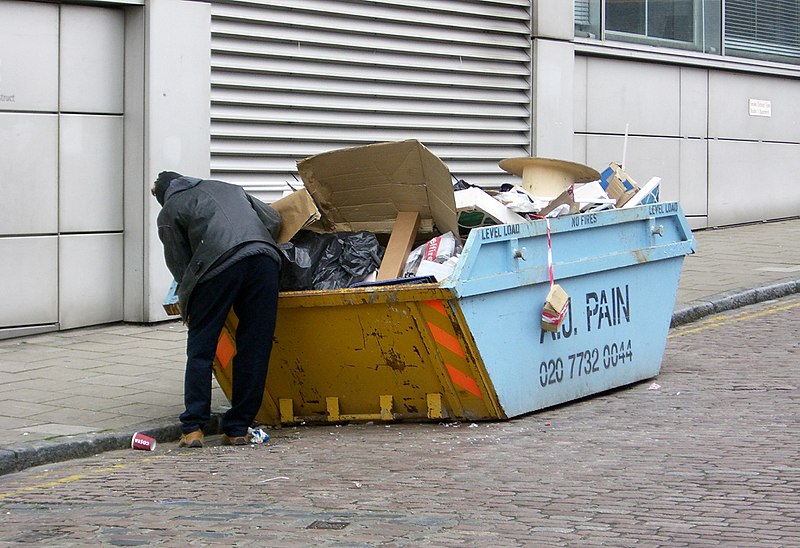
Freegans are scavengers of the developed world, living off consumer waste in an effort to minimize their support of corporations and their impact on the planet, and to distance themselves from what they see as out-of-control consumerism. They forage through supermarket trash and eat the slightly bruised produce or just-expired canned goods that are routinely thrown out, and negotiate gifts of surplus food from sympathetic stores and restaurants.

They dress in castoff clothes and furnish their homes with items found on the street; at freecycle.org, where users post unwanted items; and at so-called freemeets, flea markets where no money is exchanged. Some claim to hold themselves to rigorous standards. “If a person chooses to live an ethical lifestyle it’s not enough to be vegan, they need to absent themselves from capitalism,” said Adam Weissman, 29, who started freegan.info four years ago and is the movement’s de facto spokesman.

Wiki: Freeganism

Excerpt:

Freeganism is an anticonsumerism lifestyle where people employ alternative strategies for living based on "limited participation in the conventional economy and minimal consumption of resources. Freegans embrace community, generosity, social concern, freedom, cooperation, and sharing in opposition to a society based on materialism, moral apathy, competition, conformity, and greed."

Comment: I've heard this called Dumpster Diving

5.27.2007

Why I won't order fish

I won't order fish at a restaurant. (Exception: Salmon which has such a distinctive look and taste that I doubt anything could be its substitute!)

That Grouper on the Menu? Turns Out It Was a Fish Tale

National
That Grouper on the Menu? Turns Out It Was a Fish Tale
By LYNN WADDELL
Published: May 27, 2007
A Florida attorney general’s investigation revealed that many restaurants in and around Tampa Bay were passing off cheaper fish as grouper.

Comment: Compare the Walleye / Zander issue in Minnesota.